Originally published April 2023 in the Napa Valley Register
By: Carine Hines
Over the last year many of us adjusted our budgets to the rapid rise in cost for everything we buy. Even at the Napa Farmers Market, the cost of goods from its vendors increased similarly to the grocery store. As a consumer, that increased cost when you bought a head of lettuce or a dozen eggs may have caused you to grumble. You may have asked, does it really cost that much more to grow lettuce now than 6 months ago?
Today I want to share why that head of lettuce or dozen eggs is more expensive, how farmers decide to set prices, and why you are paying for more than just a head of lettuce when you shop from small, sustainable farms at the Napa Farmers Market. As a result, I hope that you, the consumer, can feel more confident in continuing to support your local food system despite the rising cost of food.
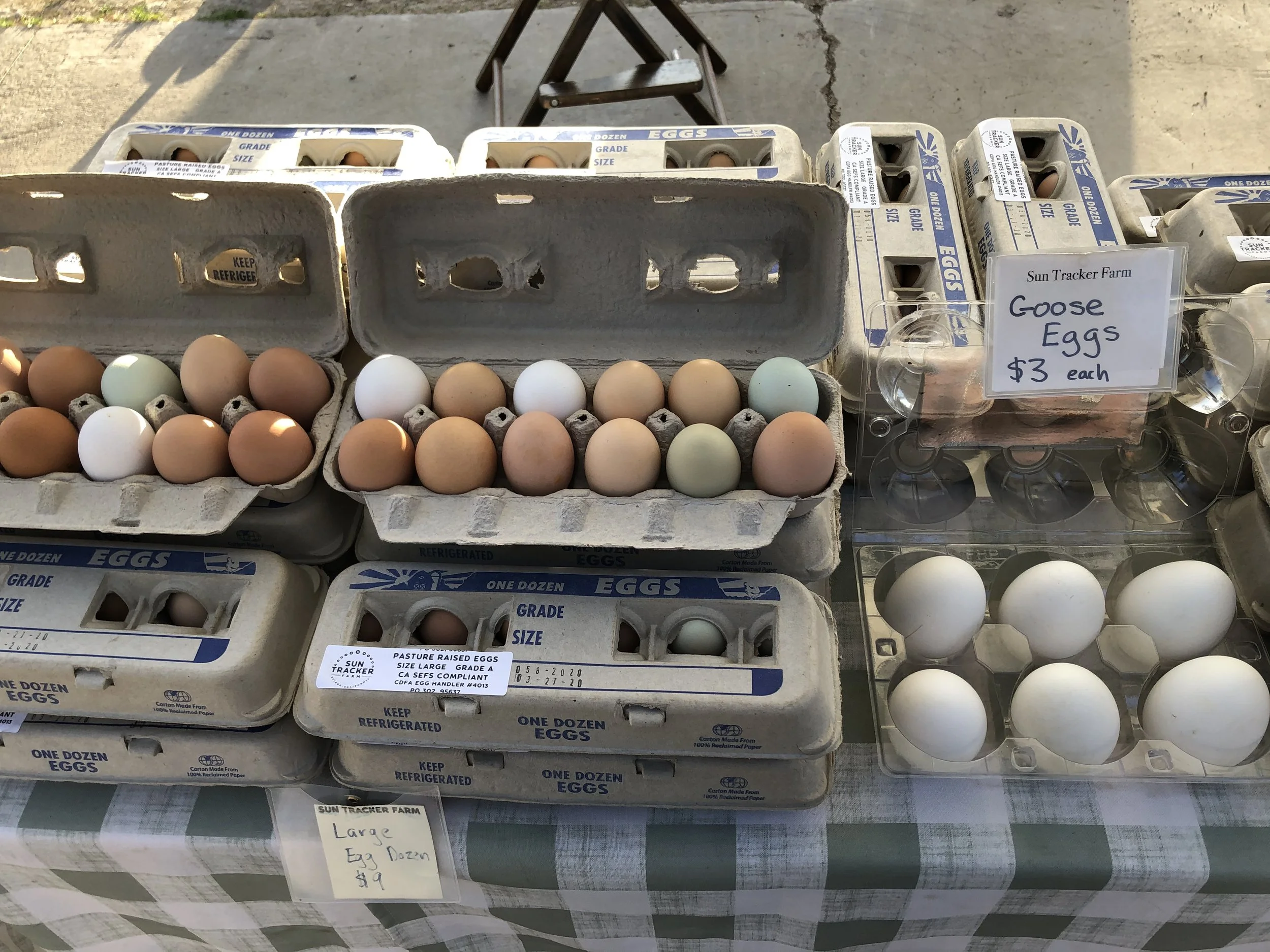
The first step to understand the increased price tags at the farmers market is to consider a farm’s cost of production. Farming is so much more than throwing seeds in the ground. If we take that head of lettuce as an example, we can calculate its cost of production based on the cost of seeds, the compost or soil amendments that promote its growth, the diesel and equipment used to cultivate the soil, the labor that went into planting, weeding, and harvesting the lettuce, and finally, the cost to drive and sell it at the market. You quickly see how the cost of production for this crop rose over the last year, which is thus reflected in its price tag at the farmers market.
Some farmers try to consider cost of production when setting prices, be it based on detailed data they gathered or a back-of-the-envelope estimate. Once they thought of their cost of production, they must naturally consider a markup that sustains their business and their livelihood. Often that markup is not high enough to be economically viable, but the farmer does not feel they can remain competitive if they raise prices. More than once I have seen farms struggle not from lack of sales, but because their income is not high enough to cover their expenses. This is why it is so important for farmers to use financial analysis tools to make business decisions.
There is another, equally important cost in that head of lettuce or dozen eggs that cannot be assigned to a dollar amount. Namely, when you shop from a small, sustainable farm at the Napa Farmers Market you are also supporting the values that farmer upholds when farming. As you can imagine most farmers do not farm just to make a profit, instead they farm to fulfill a set of guiding-star values that they believe are important for society and the planet.
A farmer’s values play an equally important role in making business decisions on their farm. For example, a farmer may choose to spend extra money on planting hedgerows and cover crops, refuse to spray crops with pesticides, or they may build a movable chicken coop so their animals have constant access to fresh pasture. These values-based decisions do not lead to more money for the farmer, but it does lead to a higher quality product whose price is more than just its cost of production.
Many of a farmer’s values you may also hold true to your heart, such as humane treatment of animals, capturing carbon, building soil health, preserving animal and plant habitats, or simply eating more healthy fruits and vegetables. You as a consumer can support these values even if you cannot implement them by shopping from small, sustainable farms. When you chose to buy your groceries at the Napa Farmers Market rather than the grocery store, you not only support that farmer’s livelihood, but you also honor their values and promote the future we need for a more sustainable food system.
You can visit the Napa Farmers Market on 8am-noon on Tuesdays and Saturdays at 1100 West Street, Napa. Carine Hines is the Vice President of the Napa Farmers Market Association and the co-owner of Sun Tracker Farm.