Originally published August 2023 in the Napa Valley Register
By: Carine Hines
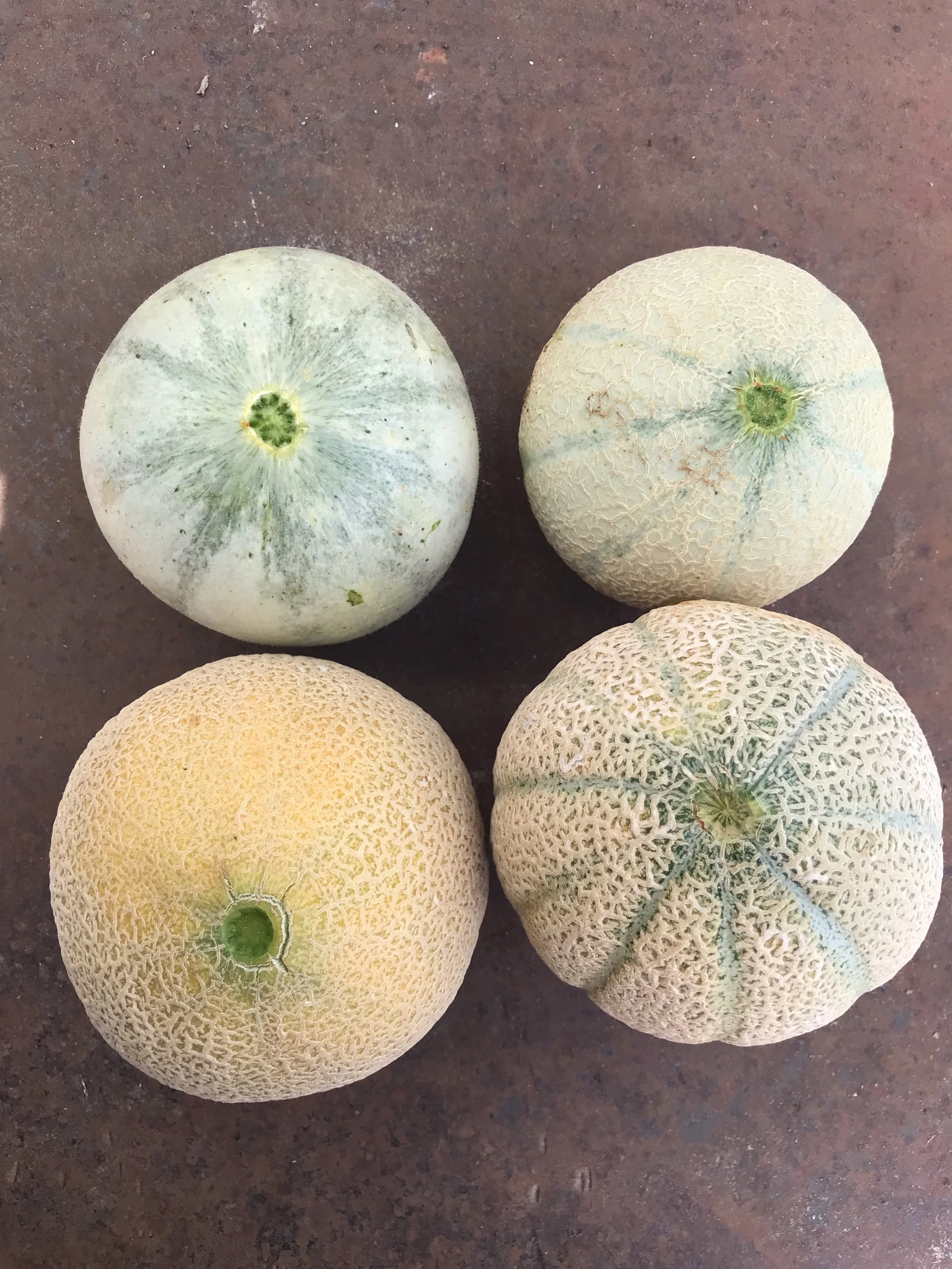
At the Napa Farmers Market, most of our customers come to see my farm’s stand, Sun Tracker Farm, during the summer knowing they can find the rare but delicious Charentais melon. Even though we grow seven different varieties of mind-blowing melons, Charentais is our “hook crop”. Customers come specifically for these melons, and while they are at our stand, they buy a few more things. Unfortunately, this year the cascading pile of Charentais melon was replaced by a “mystery melon”. This melon was orange, it was sweet, but it was not a Charentais.
Starting in March, we start seeding hundreds of melon plants every two weeks in hopes to provide the good people of Napa (and elsewhere) melons from June to October. That means almost four months pass between when we first seed our melons and when we harvest them. This year we noticed our first few successions of Charentais melons looked a little off… less vigorous, poor germination, etc. After seeing this pattern over several successions, we called the seed distribution company and asked for a fresh batch of seed (which they luckily provided). Despite this, we still anticipated a good Charentais harvest.
Then June arrived, and we only had a handful of Charentais melon in our beds. Instead, our Charentais beds consisted of a “mystery melon” and some sort of Sharlyn melon. When I walked our still-maturing melon successions I found that four future successions, meaning nearly 2000 melon plants, were of this mystery mix. The few Charentais we harvested came from seed leftover from the previous season, and all the other plants came from the batch of seed that looked a little off.
Charentais are THE crop that attract our customers in the summer, and they represent tens of thousands of dollars in sales. We were hopeful that the new batch of seed would be real Charentais, but in the meantime we were saddled with sellable but not profitable melons. Two months later I can share that yes, we lost significant income from this mystery melon. I tracked a dip in sales as soon as our table became dominated by the “mystery melon”, despite the fact that our wonderful customers embraced this story and bought our melons anyways.
The true question is, who is to blame in this story? The farmer, the seed distributer, or the seed producer? Of the three protagonists, who stepped up, who did their job, and who paid the price?
The farmers: For months the farmer planned their season, ordered seed, prepared their soil and beds, sowed seed, transplanted, watered, weeded, and most importantly, paid their bills. I may be biased, but in this story the farmers, did not do anything wrong, and ultimately, they lost significant income.
The seed distributor: The seed distributor bought seed from a trusted seed producer. They received an order and shipped the seed. When the farmers raised concerns about the seed quality, the distributor found new seed. After the discovery of the mixed “mystery melons”, they offered a refund and future discount, and vowed to reach out to the seed producer. In all they made a valiant effort to correct the wrong, they refunded a few hundred dollars, apologized, and tried to figure out what went so wrong. Ultimately some of the blame and some of the pain of this situation was felt by the seed distributor.
The seed producer: The seed producer grew, packaged, and sold seed that was not what it should be. When contacted, they did not respond. No income was lost by the seed producer, and no one took responsibility for the error.
What I truly want to share with this story is a pattern that ALL farmers face. Time and time again, we farmers plan, invest, rise to the challenge, and do our jobs. We do everything right but suddenly, someone else’s mistake and inability to do their job causes farmers cascading consequences. Stories like these are not an exception, they are a rule. Even though I am a young farmer, I have already lost thousands of dollars to people in the farm-adjacent world failing to do their jobs. Be it the hatchery that didn’t administer a vaccine and caused most our chickens to die, the loan officers that failed to process our paperwork before a deadline, or the sales reps that sold us the entirely wrong product.
Sometimes our friends ask us to leave the farm, to take a break… but what they don’t realize is we cannot hit pause on a farm. If we take a break, things die, meaning farmers are always on, they are always vigilant, they always show up. For the pencil pusher in the office, the small error here and there may seem nothing, but they don’t know the harm they cause farmers downstream. We invest so much time, money, and effort into what we do, and in a moment all this work can be thwarted.
These setbacks are grappled and tackled by all farmers, every year. They always will and always can overcome them. That said, you as customers can support you framers by hearing and appreciating these kinds of stories, and providing your support in any way you can.