Originally published October 2025 in the Napa Valley Register
By: Carine Hines
Uncertainty is always a part of being a small business owner, and even more so as a farmer. The livelihood of farmers depends not only on human decisions but the outcomes of weather, land, and climate. Since starting our farm ten years ago, Sun Tracker Farm has seen a pandemic, two wildfires, a drought, and many obstacles and changes within our own business and personal lives. Despite it all, it is today that I feel the most unpredictability about how our farm will weather the coming years.
No matter where our political opinions lie, I imagine we all feel a high degree of uncertainty for the future and how our economy will be affected by government policy changes. Over the last eleven months our farm has already navigated several obstacles, and we know so much more change is to come. While I cannot speak for all farmers, I wanted to share with you all direct examples of how Sun Tracker Farm, and other small California farmers, are being harmed by, or benefiting from, the current government administration.
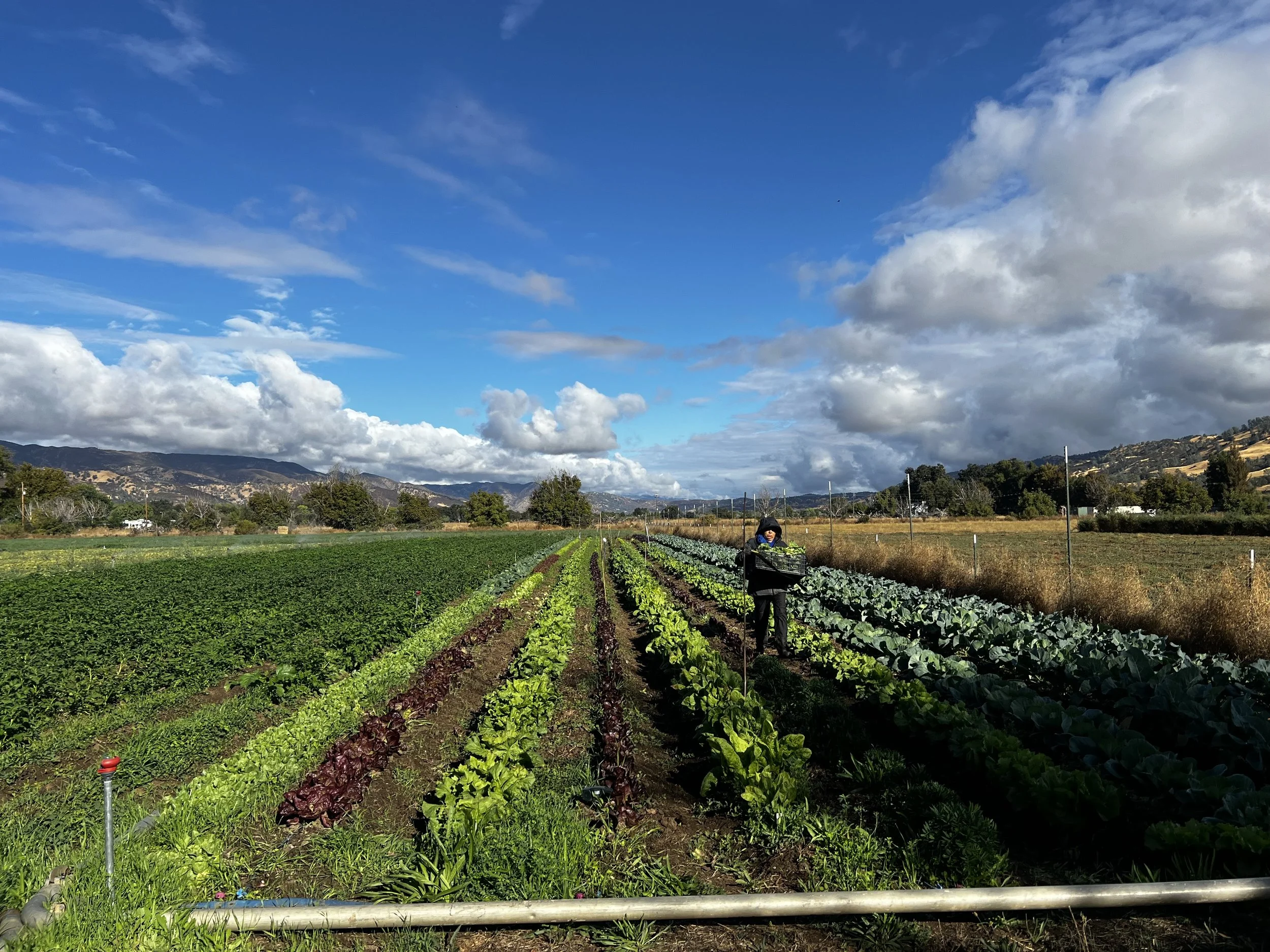
As a bit of background, Sun Tracker Farm, is a small organic farm in Yolo County that has produced fruits, vegetables, and chicken eggs since 2016. Since purchasing our land in August 2015, we turned a neglected piece of land with virtually no infrastructure (barn, greenhouse, agricultural well, irrigation system, etc) into an efficient and profitable business that sells at the Napa Farmers Market and to local food hubs and aggregators. Robert and I are the primary operators of the farm, with seasonal employees. We are fortunate to have the support network of other farmers, technical service providers, and the know-how to access educational and capital resources offered to farmers.
One of the first changes we witnessed in 2025 was the president’s efforts to close and defund government agencies and grants that support small farmers (amongst many other casualties). For example, we have a contract with the Natural Resources Conservation Services (NRCS) department which provides funding for us, and other farmers, to implement practices that protect water, air, and soil. Since 1935 the NRCS is the branch of government that recognizes how farmers can protect our land’s natural resources, and that farmers need the financial support of the government to implement practices that benefit all Americans. In early 2025, and today with the government shutdown, the NRCS experienced changes/reductions in staffing and delayed or canceled payments that were promised to us and other farmers.
Sister agency to the NRCS is the Farm Service Agency (FSA), which also experienced the same changes in services, funding, and staffing as the NRCS. This caused untold complications to farmers who have or need loans to operate their farms or purchase new land. One good thing that came from the FSA this year was a surprise grant to registered farms that grow specialty crops. The Marketing Assistance for Specialty Crops (MASC) grant was a result of the FSA doing their best to ensure funds that were set aside for farmers in Biden’s Inflation Reduction Act (IRA) made it into the hands of farmers rather than going back to the federal government. We, and other fellow farmers, received a wonderful no-strings attached grant that went a long way to boosting our businesses.
In 2024 we applied to and were awarded a grant from the US Department of Agriculture (USDA), via the California Department of Food and Agriculture (CDFA), through the Resilient Food Systems Infrastructure program. Also, coming from IRA money, this grant was intended to stimulate the economy of food systems by helping small farms and food aggregators invest in infrastructure they could otherwise not afford. For us, it meant we could purchase a potato washer and sorter to grow more potatoes and sell them at a more profitable price. This grant was canceled, and reopened, twice before finally the federal government was forced to accept that they could not break contracts to farmers. Luckily, we did finally receive payment for this grant and will be able to wash and sort potatoes with a machine for the rest of our lives.
Since 2024 one of Sun Tracker Farm's important sales outlets is through the Local Food Purchase Assistance Cooperative Agreement Program (LFPA) which was a USDA program that allowed food banks throughout the country to purchase locally grown food from small, and socially disadvantaged farmers at a premium price. This meant $88.5 million in high quality, local food was fed to low-income Californians, and every dollar spent went to the farmers so they could grow and thrive. The current administration decided to end this program, at first abruptly in early 2025, but were forced to reopen the funding program. LFPA will unequivocally end in 2026, meaning the federal government will renege on $47 million that were awarded to California for this program. This is happening in every state, and the consequences to both farmers and those who benefit from the healthy, fresh food will be devastating. For us personally, it will mark a huge change in our sales next year, and I do not know where we will find a new outlet. More importantly it means the only way we can feed our low-income community is by donating our hard-earned produce. Donating food is a wonderful part of farming, but it is ultimately unaffordable in large quantities.
Finally, we can talk about the upcoming delay in Calfresh food assistance funds for some of our customers at the Napa Farmers Market. Because of the government shutdown, so many Americans who need and depend on food assistance programs will not be able to buy their basic food needs. For Sun Tracker Farm, that will mean a hit in our sales, and for many of our fellow farmers. Since the start of 2025 there has been a concerted effort by the current administration to shrink and/or eliminate all food assistance programs for Americans. People will go hungry without programs such as Calfresh, and small businesses like our farm will also suffer.
With all the changes in 2025, I know 2026 will bring even more delayed consequences to the dismantling of government programs that are vital to not only Americans, but the few struggling farmers who feed our country. And while food is always vital to our well being, it is not always the first priority of consumers who are facing a tumultuous economy. I do not know what the future years will bring, but I know it will be much more difficult for our farm business to grow and succeed without the programs and opportunities I shared above. If farmers succeed, natural resources are protected, and people are fed healthy food, then please tell me why you have to break a system that works?