Originally published August 18, 2026 in the Napa Valley Register
There is really nothing more beautiful than a mountain range. Something about towering topography captures the human eye and inspires drama, beauty, and the feeling of wilderness. Humans go to great extent to explore or live in mountains, knowing subconsciously that these scapes of rock offer the natural divides between microcosms within our planet. Without understanding the science, we can still know that mountains play a vital role in ecosystems and the ecology of microclimates. It is perhaps these microclimates created by mountain ranges that drive centuries of cultural differences between those who dwell on opposite sides of a mountain range, which persist to this day.
California boasts one of the most beautiful mountain ranges of the world, the Sierra Nevada, that runs along the Eastern edge of the state and encircles the California Central Valley. But one of the lesser known and appreciated mountain ranges of California is the Coastal Range. The Coastal Range runs from upper Oregon down to Santa Barbara and is the western edge of the Central Valley’s “bowl”. The Coastal Range is characterized by softer mountains, sandstone and a vast range of plant communities. From redwood forests to oaklands, the Coastal Range is home to some of the planet's more incredible plants. And while its vistas do not have the Sierra Nevada’s spectacular granite slabs carved by glaciers, no one can ignore the drama of the Big Sur Coast and its rocky descent into the infinite Pacific Ocean.
What is truly astounding about the Coastal Range is its meteorological effect on the rest of California, and really the whole United States. It sits right at the edge of the US, standing as the first line of defense against the Pacific Ocean. It buffers the cold of the Pacific Ocean, and allows fog to build on its Western edge. It casts a rainshadow to the East and is responsible for California’s summers to have mild, wet temperatures to the West, and hot, dry conditions to the East. As a result, the microclimates of California are completely opposite when you drive the 30 minutes between one side of the Coastal Range and another. It is analogous to the Rocky Mountain Range for its role in buffering weather and creating different climates. And if the Rockies are the backbone of the US, then really, the Coastal Range needs its own nickname.
Before we started our farm, we were scientists and two of our dear friends were ecologists. While camping in Big Sur, we decided to find the perfect nickname for the Coastal Range that could capture its role as a first line of defense against the Pacific Ocean. As we saw the fog roll up the and over the mountains, only to disappear on the Coastal Range’s Eastern slopes, we came up with the name, “Foggy Knuckles”. If a person throws a punch, we use our knuckles to strike and defend, an apt comparison for a sentinel mountain range. And like the rolling edges of our knuckle bones that lie at the end of our arms, the Coastal Range is a ridge of rolling mountains at the edge of the country. And lastly, nothing is more symbolic of the coastal divide than fog.
I am an East of the Fuggy Knuckles farmer. For any California farmer, the Foggy Knuckles play a huge ecological and cultural role in farming practices and economics. West of the Foggy Knuckles lies moderate temperatures, fog, and the quasi year-round ability to grow crops such as lettuce, artichokes, broccoli, strawberries, and more. The summers are cool and the winters are warm along the coast, allowing for incredibly long growing seasons of so many specialty cash crops. It is because of the Foggy Knuckles that places like the Salinas Valley and the larger Central Coast feed a majority of our country. In comparison, to the East of the Foggy Knuckles we must contend with the dramatic swings between seasons. In the summer our temperatures rise to over 100 degrees, and in the winter we have frost and cold. We have the trade off of a shorter growing season for cash crops like lettuce (often only from September through May), but with summer heat we can grow crops like melons and watermelons, tomatoes, and stone fruit.
It is also because of the Foggy Knuckles that California land prices vary so drastically from one side versus the other. Farmers to the West must compete with tech millionaires from the Bay Area who can afford to buy land for millions of dollars, while all the farmers’ scrappy efforts to make a living net less than $100,000 per year. This drives up land prices and pushes farmers out of the coastal climates, or makes their long term success precarious. Land to the East of the Foggy Knuckles is still pricey, but luckily most millionaires don’t want to live in the heat and cold of the Central Valley. Instead, we East of the Foggy Knuckles farmers must make peace with heat, frost, drought, and the higher risk of wildfires and wind storms.
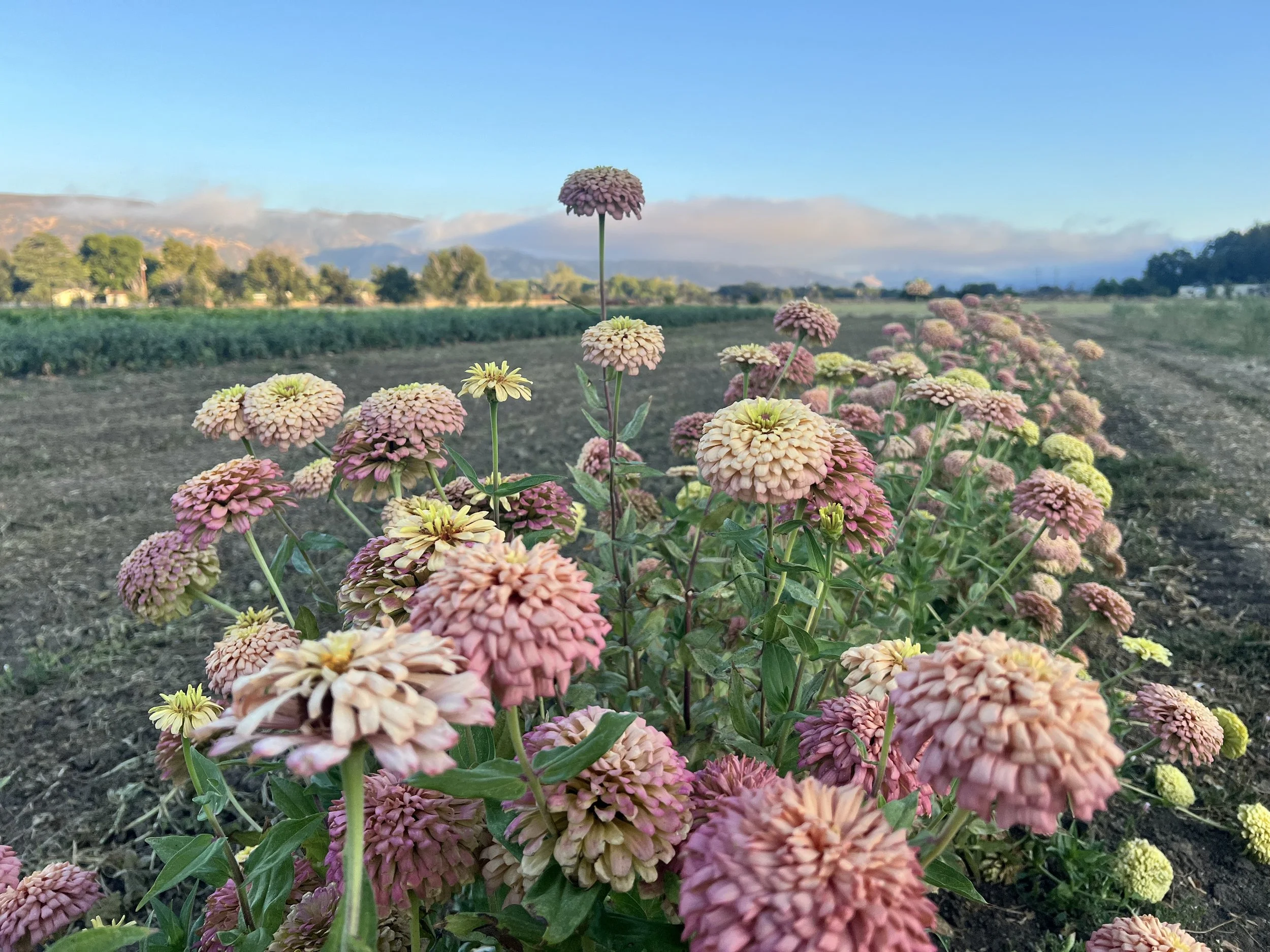
As an East of the Foggy Knuckles farmer, I can sincerely say that I love farming where I am. Yes, the heat in the summer can be unbearable, but without this heat I could not grow so many fantastic melons. I also love the seasons we have out here, rather than the constantly pleasant weather of the coast. And while I used to hate fog having grown up in Santa Cruz, I now glory in the mornings when a bit of fog makes it up over the mountain and settles in the Capay Valley.
Every Saturday morning we drive from our little valley nestled on the Eastern side of the Coastal Range, over to Napa Valley on the West. When I see the dark wall of fog greet me as I drive through Fairfield, I always send a quiet greeting and thanks to the Foggy Knuckles for its unflinching role in making California the magical land of microclimates and diverse farming. So when you taste one of my melons, packed with the sweet flavors of summer heat, know it is a gift of the Foggy Knuckles.