
Originally published March 2026 in the Napa Valley Register
By: Carine Hines
California and all its special weather patterns are certainly throwing us a remarkable spring. Instead of rain and frost warnings, we feel as if it were late May out here in Northern California. With 80-90 degree temperatures and warm nights, spring is exploding all around us.
I am left breathless at the surrounding beauty while working and walking around the farm over the last few weeks. The wet months of early winter, and the sunshine of today puts on display nature at its finest. For me, it’s all the more special because most of these walks are accompanied by my newborn son, who is always calmed by the sensations he feels while outside. His developing mind may not process every sight, smell, sound, and touch as we do, but nonetheless, he absorbs the serenity and lifeforce of spring.
Early in the morning, I wake to the sounds of hundreds of birds chattering and flying through the Toyon and Matilija poppies outside my window. They are making nests with grass, in every corner and eave of our house, and branch nook in the trees. In the evenings we see incredible murmurations of blackbirds flying in their mesmerizing arcs, swoops, and mathematically marvelous acrobatics over our fields and up in the surrounding hills. Spring is most certainly a barrage of bird sounds and sights.
Speaking of the hills surrounding the farm, they are still bright with the neon green of chlorophyll a, the pigment of grass’s new growth. The darker colors of Valley and Live oaks and Grey pines dot the landscape. Soon the grass will die off to gold and the trees will stand out to create California’s quintessential summer landscape. Golden poppies begin to dot the hills and valley floor, and amnsinkia blooms unfurl their yellow-orange and spikey scorpiod inflorescences.
Down on the valley floor, I greet every shrub and bush we planted around the farm in hedgerows as friends that just woke from a long nap. A few of my favorite friends around the farm bring me incredible joy. The California red buds are transitioning from their magenta blooms to tender, heart shaped leaves. The Fremontedendron bushes send out bright new leaves and flower buds that will soon turn into yellow blooms that look like fuzzy hibiscus flowers, true to its nickname the “flannel bush”. The Toyon bushes have dusty, green leaves and panicles of flowers that will in the winter turn to bright red berries that my sons love to collect. Elderberry shrubs burst with elegantly arced pinnate leaves and fragrant white umbels of flowers that will turn into medicinal berries in the summer. The sages outside our living room window waft their strangely pleasant ammonia smell that reminds me of bees and humans communing with spirits. And the mess of iris bulbs that lay dormant most of the year, burst with bearded white and purple blooms that are as beautiful as they are effervescent.
This year my oldest son discovered our riparian zone. A tangle of native cottonwood trees that tower over willows, and sadly, invasive and water-stealing Arundo donax and Tamarisk clumps makes for an unlimited and unexplored adventure for an eight year old boy. He heads down with clippers to make paths around this imperfect jungle where he discovers mini grass meadows, rarely-seen-in-our-valley blackberry shoots, and brings me back bouquets of pink Tamarisk flowers (the only time of the year I like these evil plants).
In my non-native plant garden, the line of lilac bushes we meticulously tend over years are finally big enough to harvest bunches of the pale pink, white, and purple blooms. Their bouquets fill my house with the smell of a romantic, dusky, spring night. Maybe next year there will be enough flowers to bring you all to the market. In the orchard the prunus trees are blooming with future stone fruits, and the fig tree has the cutest miniature figs.
Can you tell I mostly love plants? But not to fret, I will tell all you animal lovers about the baby chicks that scratch in the dirt as they explore new patches of grass, and peep and cuddle in heaps of feathers at night. The lizards wake from their exothermic slumber to dart around and over logs, and do push ups on my stoop to mark their territory. Every day we see a large, lonely hare hop around the house and greenhouse, until our dogs try, and never succeed, to catch it. And oh the bees, and beetles, and so many other flying and crawling things that tell of a farm that loves its biodiversity.
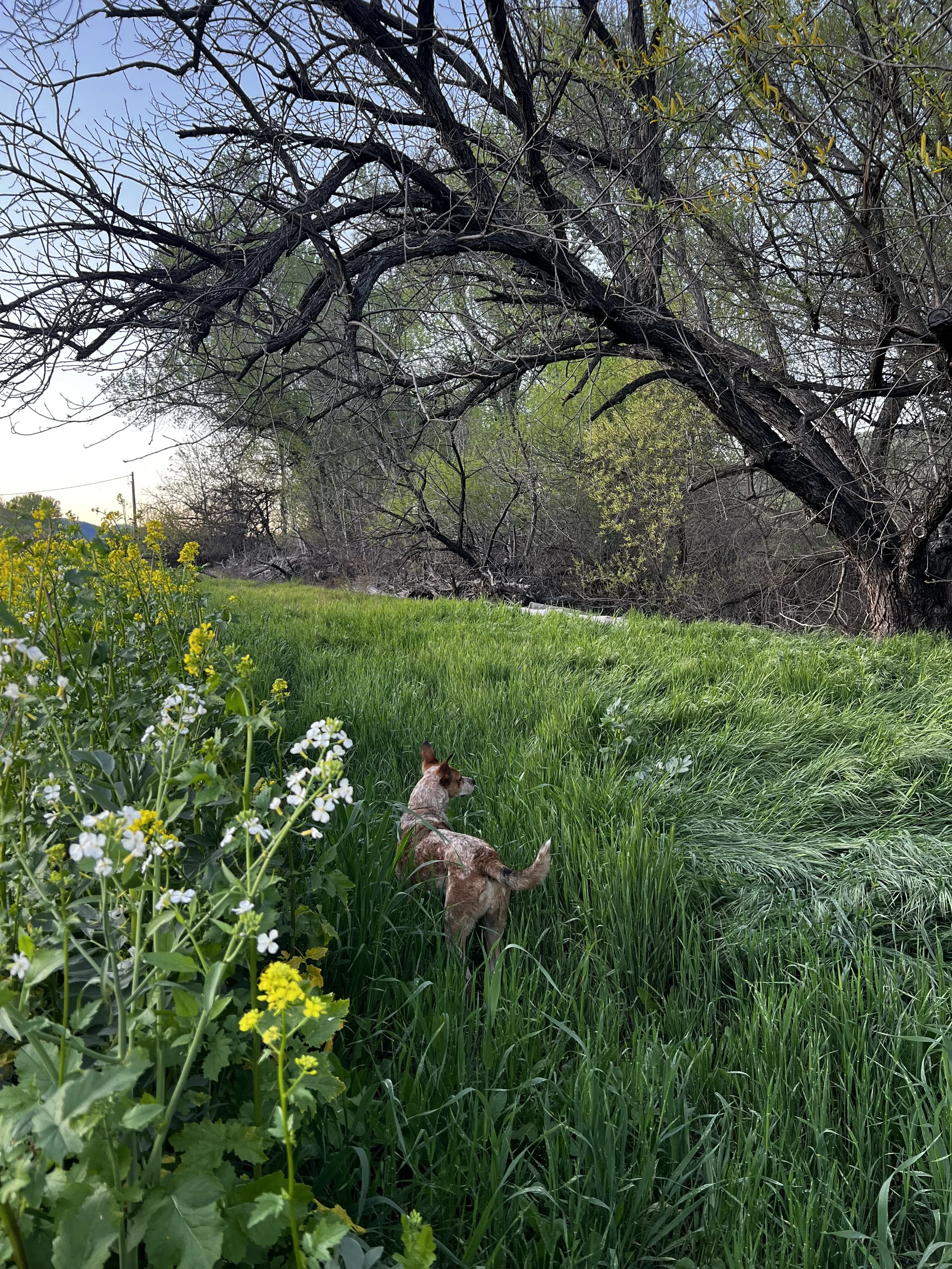
The fields themselves were just last week a sea of yellow, white, pink, and green from the cover crops. At five feet tall, the radishes sent up their yellow four-petal crosses, giving them their namesake of a cruciferous crop. The fava bean flowers bloomed with their white petals, and if you look closely, black dots at the center of the bloom and at the base of the peduncle. And the peas with their delicate tendrils and pink flowers. It’s a veritable feast for the eyes and for snacking upon as you walk by.
There are countless other stories of spring I could share, that tell of the return of our flora and fauna friends. It’s a time of transition and waking that I feel all the more this year as I approach the end of the “fourth trimester” of pregnancy. With our baby in our arms or in a pack, we begin anew the 2026 season on the farm. The greenhouse is full of seedlings, we are testing out our new transplanter, beds are being filled with the first successions of summer crops, but still, we have time to stop and smell the flowers while they are still here.