
Originally published September 29, 2026 in the Napa Valley Register
By: Carine Hines
You would be surprised how often I am asked, “Do your kids eat veggies and fruit”? My sheepish answer is “Well… yes they do”, an answer I am almost embarrassed to answer to parents who are desperate to get their kids to eat anything other than strawberries. My kids gravitate towards the fruit and salad (and of course cupcakes) at a potluck. I do not think we are superhuman parents who magically made children who like fruits and vegetables, instead we follow a few basic eating habits that are simply how we eat, rather than a diet we strive for.
So how does this farmer family raise children who eat fruits and vegetables? Here is how I think we do it:
Plants are the most important part of the meal, not the side. When I think about what to make for dinner, lunch, etc, there will always be at least 5 plants in the meal and they dictate everything else. For example, I could have a random bunch of mint in my fridge, which then triggers me to look for recipes with mint, that I then narrow down by finding what fruit or vegetables I have available that accompany the mint. If the recipe calls for a carb or protein that I have, then great, if not I figure out some way to get by without it. Except for the occasional steak or baked chicken, the star of every meal are the plants we eat.
We rarely feed our kids snacks that come out of a package. Again, we are not saints and sometimes we buy chips or icecream, but my kids’ snacks are usually whole foods like fruit, nut butters, bread, yogurt, and smoothies. Not only are they minimizing their plastic footprint, but they are also learning to rely on food that is not full of sugar and salt.
Perhaps the most important rule, I never ask them if they want to eat fruit or vegetables. Instead, I simply cut them up and put them out, at all times of the day. If I ask my kids, “Do you want a daikon radish?” they will definitely say “No”. But if I cut up a purple daikon radish and a few strips of cabbage and put it out on the table while I’m cooking dinner, they will usually come explore and take a few nibbles. When they tell me they are hungry, I prepare them toast or a quesadilla, but I also cut up some fruit. The point is, fruits and vegetables are not a decision they need to think about, it’s the default that is always available. As I see it, if kids, like any curious animal, see something often enough, they will usually put it in their mouth and explore its taste and texture.
Kids like raw vegetables. My kids will never eat a cooked carrot, but they will always eat a raw carrot strip. Instead of fighting it, I embrace it and always offer a raw vegetable option to replace the cooked veggies. So if they don’t want my garlicky roasted eggplant, then they can eat the salad instead.
Find a good vinegar/vinaigrette/sauce your kids like and there is no vegetable they will not eat. For us, it’s the balsamic vinegar our friends at Pasture 42 Farm make. I make little bowls of vinaigrette the kids can dip veggies in or spoon over their veggies like green beans, lettuce, cucumbers, or peppers. Heck, that sauce may be ketchup! But if dipping their broccoli in ketchup (obviously to turn them into apple trees) gets them to eat the broccoli, then do it!
This one may be a bit controversial for modern eating theories, but we do tell our kids that if they are too full to eat their salad, then they are too full to eat ice cream for dessert. We are not forcing them to finish a whole plate of ratatouille, but if they won’t eat anything that comes from a plant at dinner time, then they made their choice.
Never give up, because every day is different. One day my kids will only want to eat rice, but the next meal I find myself telling them “You need to eat your pizza before you can have any more salad”. Kids cluster eat certain foods at certain meals and on certain days. If one day they tell me they don’t want a certain veggie, I still keep offering it knowing they will one day eat it.
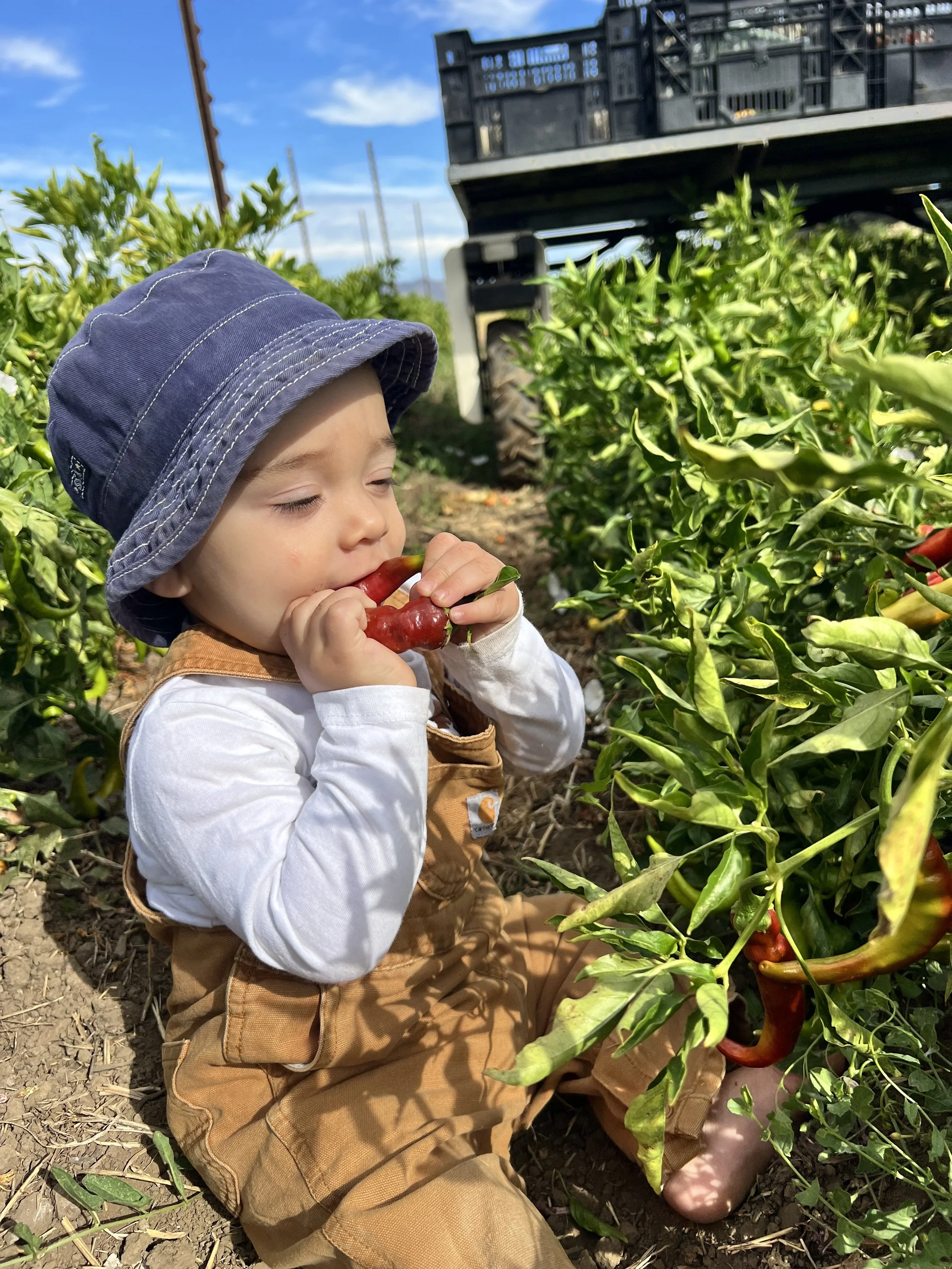
Show them where food comes from and let them touch, see, and smell it. For us that’s easy because the kids can walk out to the fields and eat straight off the plants. If you can, make your kid a little garden, bring them to the farmers market, and have them help in the kitchen.
Speaking of helping in the kitchen, one of my most successful veggie-eating tricks is to turn meals into cooking experiences. I cook a carb such as rice, noodles, or potatoes, a protein such as tofu, beans, or meat, and then cover a big cutting board with all sorts of chopped raw vegetables such as cucumbers, carrots, tomatoes, avocado, herbs, lettuce, and onions. At dinner, the kids get to decide what goes in their bowls, what sauces and spices they want to add, and what flavors and textures they want to eat together. It’s easy, healthy, and a fool proof way to involve them in the process of cooking.
There are likely many more studied and unstudied techniques that dieticians and parents alike could add to this list. This is what works in our home so that while our kids do LOVE their occasional hamburger or milkshake, they also love fruits and vegetables. Eating plants is not an effort or battle, and is instead a delicious and commonplace part of the day that our whole family enjoys.