
Originally published November 2024 in the Napa Valley Register
By: Carine Hines
It finally happened last week, the first frost on our farm. Overnight the remnants of our summer crops turn from green to a crisp brown, leaving behind the cadavers of summer bounty. Earlier in the week we started cutting our tomato plants from their trellises, allowing the bushes to fall to the ground. Now that we had our first frost, they look like brown beasts sleeping on the ground, dotted with the orange, yellow, and red dots of old tomatoes we never harvested. It is a melancholic and beautiful sight to see.
This year’s autumn season was relatively warm and dry compared to previous years. By Halloween we usually see a hard frost that marks the end of summer. Our exhausted farmer spirits kept waiting for cold mornings that would bring about a forced stop to summer crops. Alas, the days shortened, our fall crops ripened, but summer persisted. Instead of harvesting for only one season, at a time of year when we have the added work of preparing for winter, we continued to harvest summer produce alongside fall greens, pulling out every last penny from the summer crop investment. Financially it makes sense, and our customers loved eating tomatoes in mid-November, but we were tired.
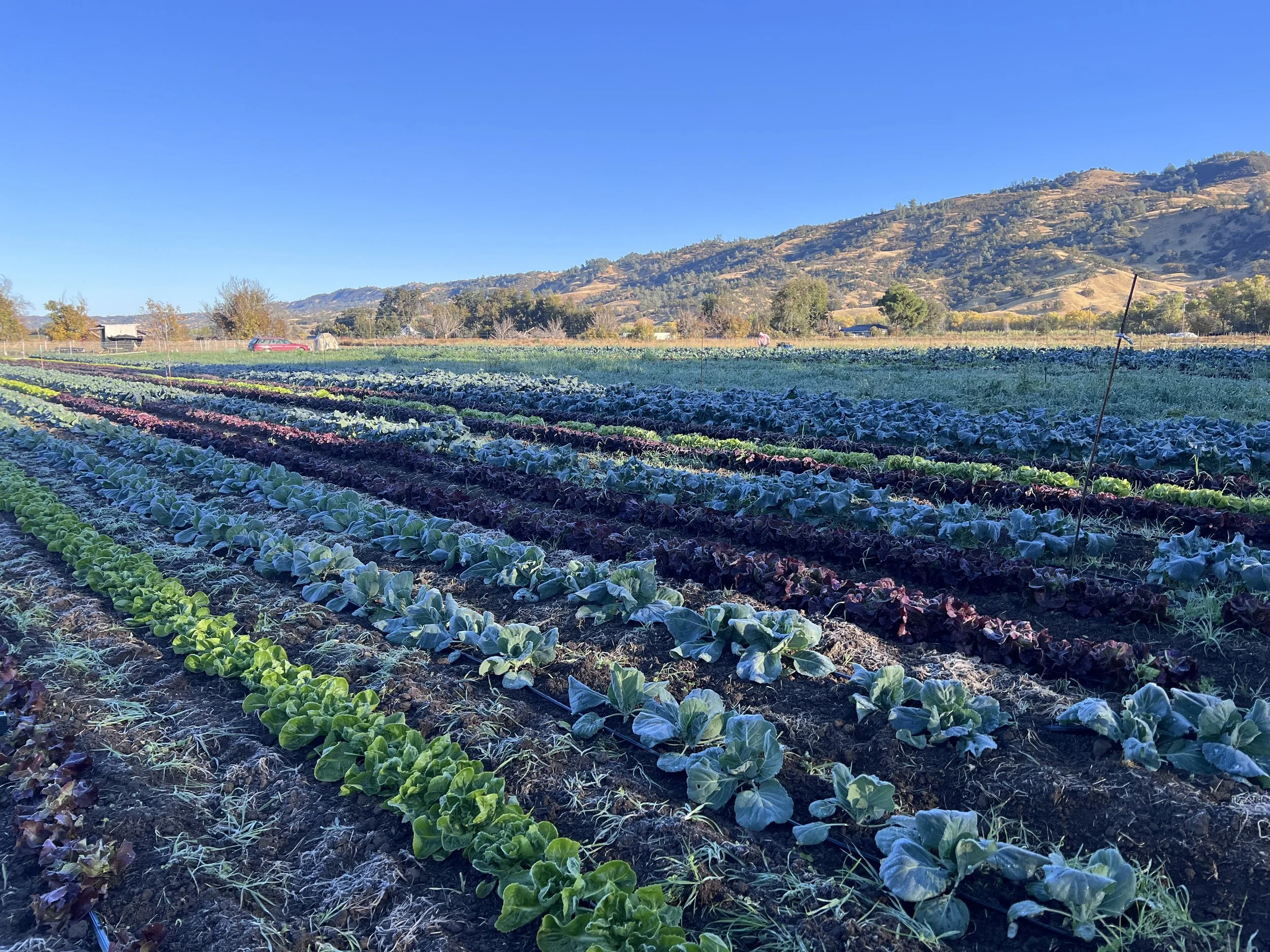
As of today, November 12th, it is official. The cells of tomatoes, eggplant, melons, peppers, and summer squash burst apart when their cytosols turned to ice. Organelles in the cell such as chloroplasts turned to mush in the morning hours, their proteins housing sensitive photopigments denaturing and the pigments turning to nothing but brown ghosts. Life has ended for these plants that can tolerate 115 degree summer days, but not a brisk 32 degrees. They fought hard through the summer heat, and now give way to the winter cavalry. Broccoli, carrots, and cabbages will thrive in their place, the cold temperatures triggering their system to circulate more sugars in their cells, thus making it harder to burst when temperatures dip. The battle to live and grow continues, and we as farmers will nurture and tend as we can.
I can’t lie that this November my soul is weary. It is a physical and emotional weariness. My body is tired from the long hours spent working the farm and selling produce all year. My mind is fried from keeping so many lists in my head, to-do lists, harvest lists, seeding lists, availability lists, packing lists… it goes on. And now I am burdened with worry for the future and how to move forward. Already we are worried about rain. Will it be a year of drought? How will the agricultural community be harmed by the incumbent administration? I don’t know the answers to either, and I need time to figure out how to navigate what is to come.
Today, I can say a heartfelt thank you to the summer crops that kept me company over countless hours these last six months. In the next week we will mow them down, cover them with a beautiful layer of compost and gypsum, and replace them with cover crop seeds to replenish the soil that housed them. Morning frosts will blanket our fields in the months to come, giving the ecosystem a chance to die, clean, heal, transition, and be born again. I too will let the frost and its accompanying winter season do to me what it does to plants, animals, and soil. In spring we will rise, in spring we will move forward, but in winter we rest, rally, and grieve.