Originally published February 2024 in the Napa Valley Register
By: Carine Hines
Every five years the USDA conducts an Agricultural Census of farmers across the country. Even though this census is dependent on voluntary response, it is nevertheless a crucial metric to assess the state of our country’s agricultural landscape. Data can be daunting to read, and it never perfectly captures what we need to know, yet we cannot ignore data and make decisions for the future without grounding ourselves firmly in fact. With this, I wanted to share a few takeaways from the 2023 USDA Ag Census (summaries sourced from Modern Farmer), and more .
The overwhelming take-homes from the US Ag Census are the shrinking acreage of farmland in this country, and the trend towards bigger farms. Farmed acres are down from 900 million in 2017 to 880 million acres recorded in 2023. As well, there are 142,000 less farms since 2017, yet the average size of farm increased by 5%.
How can we interpret these data points, and what do they mean for us? To me, all I see are missed opportunities. Agriculture is the only human industry that can immediately and effectively capture atmospheric carbon (CO2) and reverse climate change. Every other industry by humans generates more atmospheric carbon or environmental waste than it captures. If humans want to be part of the climate problem, then we need to stop thinking that a high-tech shortcut like putting a giant “shade umbrella” in outer space is the answer. No, we can start reversing climate change now by turning to the true warriors in this struggle: plants and the microorganisms in soil.
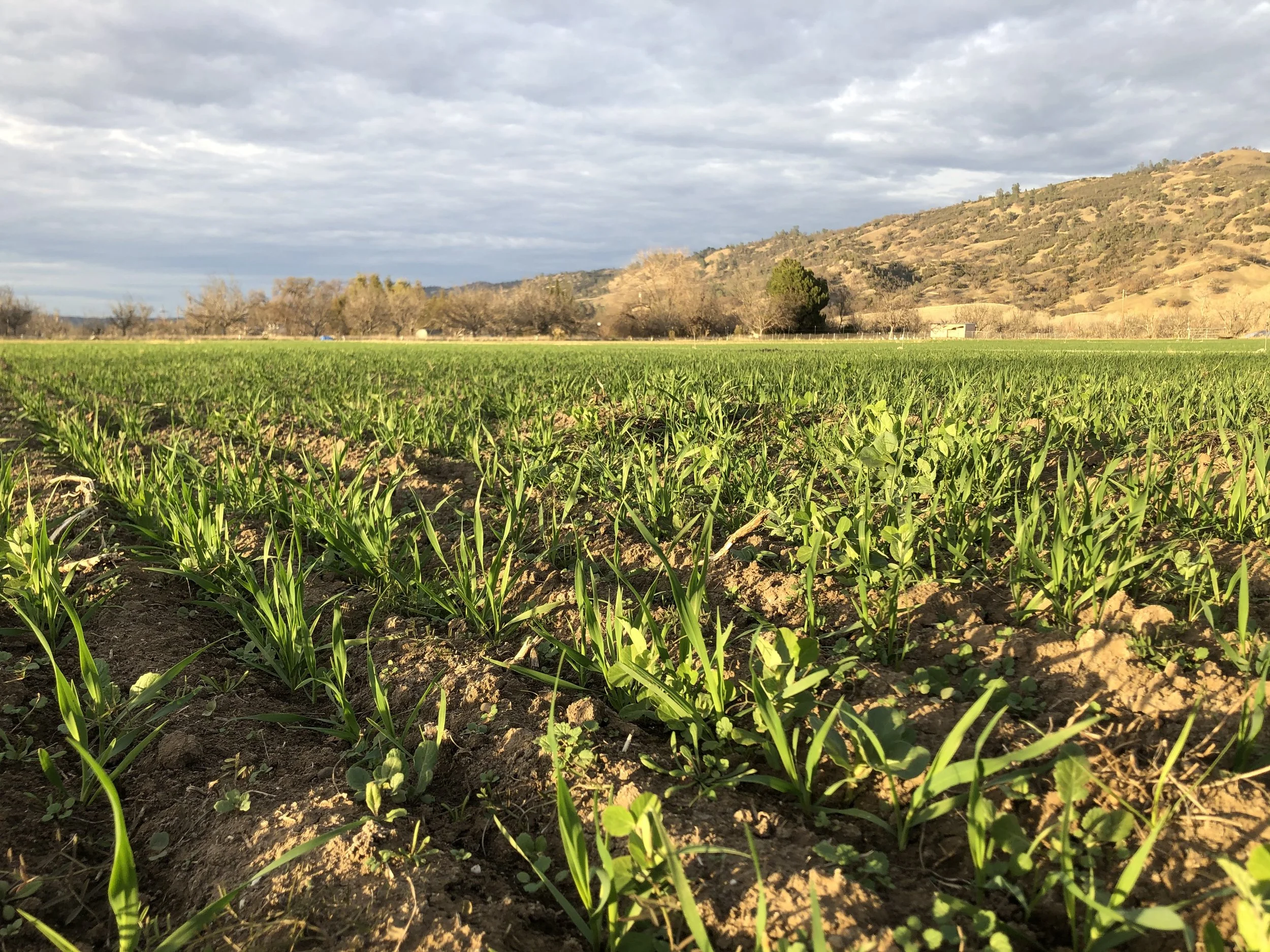
Soil can hold carbon as soil organic carbon (as opposed to CO2). How does it get there? Plants (and algae) photosynthesize to capture atmospheric CO2 carbon and turn it into the building blocks of their cells and biomass. When these plants die or a farmer turns their plants, or say cover crop, into the soil, microorganisms in the soil eat the plants and store the carbon as soil organic carbon. If given the chance, plants can take all the excess carbon in our atmosphere and turn into healthy and alive soils that can, in turn, grow human food without synthetic inputs such as fertilizer.
So when we see the decreasing acreage of US farmland, I do not see it as land returned to its wild and pristine state. Instead, I see land that was most likely farmed to death by extractive practices until it died (yes, soil can die, but it also can be reborn again). Or, farmland was turned into developments of strip malls, golf courses, and suburbs. And while we need more homes, particularly in California, we also need farmland to produce food locally and to reverse the effects of climate change by allowing plants to photosynthesize and enhance soil organic carbon. If we get rid of farmland, we are throwing away the ladder we need to climb out of our metaphoric climate crisis pit.
More data for you to consider… 27% of human-generated CO2 emissions since 1750 were due to carbon released from the soil by agriculture (Sanderman et al., 2017 PNAS). Wait, you may say, this means agriculture was one of the largest producers of the world’s CO2 emissions since the start of the industrial revolution. True, and because the US Ag Census shows a trend towards larger farms, this unequivocally means a trend toward extractive, carbon-producing agriculture.
I would have to quote several studies to tell you that larger farms trend toward industrial, extractive agriculture rather than regenerative, carbon-capturing agriculture. Even in organic farms, the bigger they get, the less likely they are to implement diverse agroecological practices. So why do we do it? Because it’s cheap and fast.
The data is clear: as time passes we trend towards a future where agriculture will cause more climate change pressure, or American agriculture will slowly disappear. Yet I am telling you there IS hope, we have the ability to reverse climate change and we can save the American farmer. We need to stop buying our tomatoes from Mexico, stop eating feed-lot beef, and start giving farmers the farmland and the financial backing to fix atmospheric carbon AND feed our country.
You can be part of this solution by buying your food from small, organic, local farms. This may be at the Napa Farmers Market, your local grocery store, or a nearby farm stand. As well, let’s all yell from the top of our lungs, so that the CEOs, assembly members, presidents, and more know, give farmers the land and financial security so they CAN capture carbon and grow our food.